
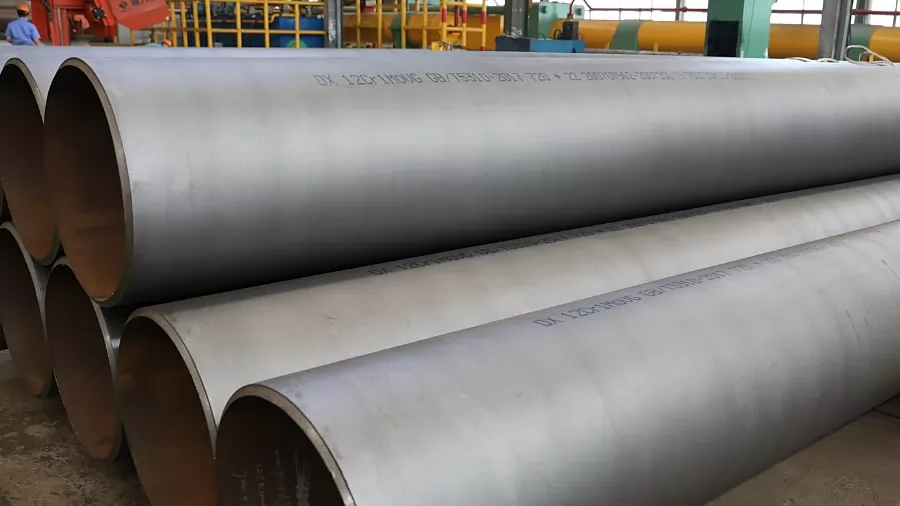
When it comes to selecting seamless steel pipes for your project, understanding the difference between cold-drawn and cold-rolled pipes is essential. Both types are widely used in industries ranging from machinery manufacturing to structural applications, but they offer distinct properties that can significantly affect performance, cost, and durability.
Have you ever wondered why two pipes that look almost identical can behave very differently under stress, pressure, or during welding and fabrication? In this article, we’ll explore the real differences between cold-drawn and cold-rolled seamless steel pipes — not just the technical specifications, but what they mean in practical terms for your projects and applications. Let’s find out which type of seamless pipe is the best fit for your needs.
Seamless steel pipes can be manufactured using different cold working techniques, each affecting the pipe’s mechanical properties, surface finish, and dimensional accuracy. The two most common methods are cold-drawn and cold-rolled. Understanding the distinction between these processes is important for selecting the right pipe for your application.
Cold-drawn seamless pipes are produced by pulling a hot-finished or annealed steel tube through a die and over a mandrel at room temperature. This process improves the mechanical properties, increases strength and hardness, and provides precise outer and inner diameters. Cold-drawn pipes are widely used in applications requiring high dimensional accuracy and strength, such as hydraulic cylinders, automotive components, and precision machinery. Learn more about the manufacturing steps in Cold Drawn Pipe Manufacturing Process: 10 Important Steps.

Cold-drawn and cold-rolled seamless steel pipes are two common types of precision steel tubing used in engineering, manufacturing, and construction. Although they may look similar at first glance, their properties, manufacturing processes, and applications differ significantly. Here’s a detailed comparison based on key aspects:
| Aspect | Cold-Drawn Seamless Pipe | Cold-Rolled Seamless Pipe |
|---|---|---|
| Manufacturing Process | Produced by pulling a steel tube through a die and over a mandrel at room temperature, improving strength and dimensional accuracy. | Produced by rolling a steel tube at room temperature, compressing the material and enhancing surface finish and roundness. |
| Surface Finish | Smoother than hot-rolled but slightly less smooth than cold-rolled; may require additional finishing for high-precision applications. | Very smooth surface with excellent roundness and uniformity; ideal for applications requiring appearance and surface quality. |
| Dimensional Accuracy | High accuracy for inner and outer diameters; suitable for precision mechanical applications. | Good accuracy, especially in wall thickness and roundness; slightly less precise in inner diameter compared to cold-drawn pipes. |
| Mechanical Properties | Higher tensile strength and hardness due to cold working; excellent for high-strength applications. | Good strength with improved ductility; suitable for general engineering and structural applications. |
| Typical Applications | Hydraulic cylinders, automotive parts, precision machinery, high-pressure tubing. | Decorative structures, furniture, industrial equipment, pipelines requiring smooth surface. |
| Cost | Generally higher due to additional cold drawing process and precise tolerances. | Relatively lower; cost-effective for applications prioritizing surface quality and moderate strength. |
| Advantages | High strength, high precision, excellent dimensional consistency. | Excellent surface finish, good roundness, lower cost for moderate requirements. |
| Disadvantages | Higher cost, limited to smaller batch sizes in some cases. | Lower strength compared to cold-drawn; inner diameter precision slightly less accurate. |
Cold-drawn seamless pipes are produced by pulling a steel tube through a die and over a mandrel at room temperature. This process compresses the steel, improving its tensile strength and dimensional accuracy. On the other hand, cold-rolled seamless pipes are manufactured by rolling a steel tube at room temperature, which compresses the material and enhances surface finish and roundness. While both processes are cold working methods, cold drawing emphasizes internal precision and mechanical strength, whereas cold rolling focuses more on surface quality and shape uniformity.
Cold-drawn pipes generally have a smoother surface than hot-rolled pipes, but slightly less smooth than cold-rolled pipes. Additional finishing may be required for applications demanding very high precision. Cold-rolled pipes, in contrast, offer an exceptionally smooth surface and excellent roundness, making them ideal for applications where appearance and surface quality are critical.
Cold-drawn pipes exhibit very high dimensional accuracy, both in outer and inner diameters, making them suitable for precision mechanical components and high-pressure systems. Cold-rolled pipes also have good dimensional accuracy, particularly in wall thickness and overall roundness, but their inner diameter may be slightly less precise compared to cold-drawn pipes.
Cold-drawn pipes benefit from higher tensile strength and hardness due to the cold working process, which makes them suitable for high-strength and high-pressure applications. Cold-rolled pipes offer good strength combined with improved ductility, making them appropriate for general engineering and structural uses where extreme strength is not the primary requirement.
Cold-drawn seamless steel pipes are often used in hydraulic cylinders, automotive parts, precision machinery, and other applications that demand high pressure resistance and precision. Cold-rolled pipes are commonly applied in decorative structures, furniture manufacturing, industrial equipment, and pipelines that require smooth surfaces but moderate mechanical strength.
Cold-drawn pipes are generally more expensive due to the additional drawing process and tight tolerances. Cold-rolled pipes are relatively cost-effective, especially for applications where excellent surface quality is important but extreme mechanical strength is not required.
Cold-Drawn Pipes: Advantages include high strength, superior dimensional precision, and excellent consistency. Disadvantages include higher cost and limitations on large batch production in some cases.
Cold-Rolled Pipes: Advantages include excellent surface finish, good roundness, and lower cost for moderate-strength applications. Disadvantages include slightly lower strength than cold-drawn pipes and less precise inner diameter tolerance.
In summary, the choice between cold-drawn and cold-rolled seamless steel pipes depends on your project’s priorities. If high strength, precise dimensions, and pressure resistance are critical, cold-drawn pipes are the preferred choice. If surface finish, appearance, and cost efficiency are more important, cold-rolled pipes may be more suitable.
| Your Requirement | More Suitable Option |
|---|---|
| Thick wall / Small inner diameter | Cold-drawn seamless steel pipe |
| Thin wall / High consistency | Cold-rolled seamless steel pipe |
| Small batch, multiple specifications | Cold-drawn |
| Medium or mass production | Cold-rolled |
| Extremely high dimensional stability | Cold-rolled |
| Complex custom specifications | Cold-drawn |

A cold-drawn seamless steel pipe is made by pulling the pipe through a die at room temperature. This process increases mechanical strength, allows for thicker walls in small diameters, and supports custom or complex specifications.
A cold-rolled seamless steel pipe is produced by rolling the pipe at room temperature. It features thinner walls, smoother surface finish, and high dimensional consistency, making it ideal for medium-to-large batch production.
Cold-drawn pipes offer higher strength, thicker walls, and customizability. Cold-rolled pipes excel in surface finish, uniform dimensions, and stability in volume production.
In some cases, yes. However, for applications with strict tolerance, wall thickness, or surface finish requirements, choosing the right type ensures optimal performance and durability.
Cold-drawn seamless steel pipes are generally better suited for small-batch production or highly customized specifications due to their strength and adaptability.
Cold-rolled seamless steel pipes are preferred for medium to high-volume production, especially where surface quality and dimensional uniformity are critical.
Cold-drawn pipes may be more expensive for small or custom orders because of additional processing. Cold-rolled pipes are usually more cost-effective for larger, standardized production runs. Check seamless pipe prices
Choosing between cold-drawn and cold-rolled seamless steel pipes is more than a technical choice — it’s about matching the right pipe type to your project’s specific requirements. From wall thickness and dimensional stability to surface finish, production volume, and cost considerations, each type offers unique advantages that can significantly impact performance and efficiency.
At Dexin, we understand the importance of making informed decisions. That’s why we provide a comprehensive range of both cold-drawn and cold-rolled seamless steel pipes, supported by expert guidance and reliable quality. Whatever your project demands, Dexin is here to help you select the ideal solution. Ready to choose the perfect pipe? Contact us and let’s ensure your project succeeds from the start.


Your Name*
Your Email*


