
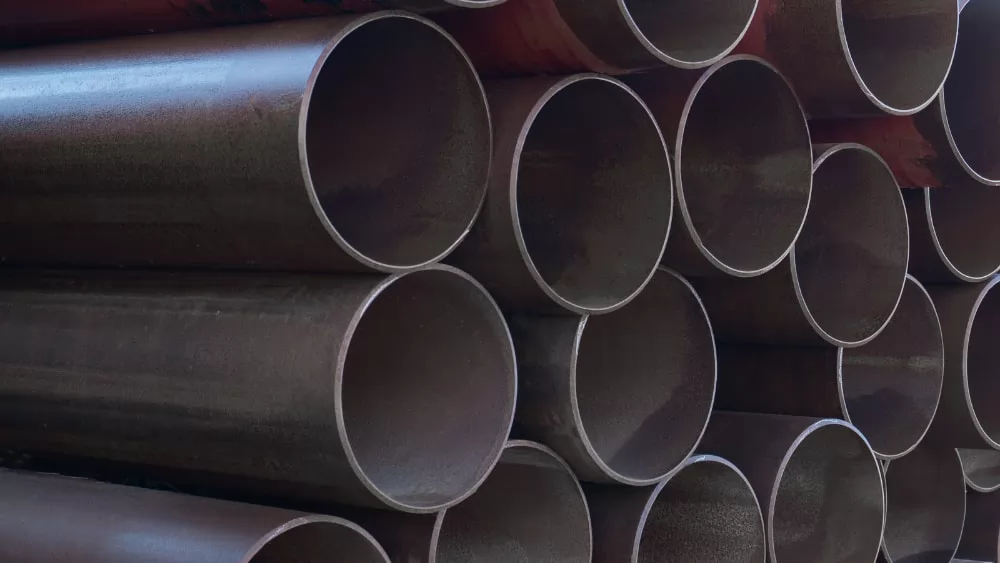
When sourcing hydraulic seamless pipes for high-pressure systems, choosing the right partner is just as important as selecting the right steel grade or standard. Many buyers search for hydraulic seamless pipe suppliers, but often end up contacting traders without realizing the difference.
In hydraulic applications—such as hydraulic cylinders, construction machinery, and industrial fluid systems—pipe quality, dimensional accuracy, and pressure resistance directly affect system safety and performance. This is why understanding the difference between a supplier (manufacturer) and a trader is critical before placing an order.
In this guide, we clearly explain how suppliers and traders differ in terms of production capability, quality control & standards, customization, delivery stability, and project risk—so you can make the right sourcing decision for your hydraulic application.
A hydraulic seamless pipe supplier is typically a manufacturer that produces seamless steel pipes specifically designed for hydraulic and high-pressure applications. These suppliers own production facilities and control the entire manufacturing process—from raw material selection to final inspection. Learn more about our factory and capabilities.
Hydraulic seamless pipe suppliers usually offer pipes manufactured through hot rolling or cold drawing processes, followed by precision sizing and surface treatment. Common standards include EN 10297, DIN 2391, and ASTM A106, all of which are widely used in hydraulic systems.
Because hydraulic systems require strict dimensional tolerances, smooth internal surfaces, and consistent mechanical properties, suppliers are able to adjust production parameters to meet project-specific requirements, including custom outer diameters, wall thicknesses, and lengths. Explore our product range for details.
A hydraulic pipe trader acts as an intermediary between steel pipe manufacturers and end users. Traders do not produce seamless pipes themselves; instead, they source products from multiple mills and resell them to customers. See our branches & partners network for examples.
Traders typically focus on stock materials and fast delivery rather than customized production. While they can be suitable for standard hydraulic pipe sizes and small-quantity purchases, they usually have limited control over manufacturing consistency, inspection processes, and production scheduling.
For non-critical or short-term hydraulic applications, traders can provide convenience. However, for projects that require stable quality, traceability, and long-term supply, relying solely on a trader may introduce additional sourcing risks.
| Key Difference | Supplier | Trader |
|---|---|---|
| Manufacturing Capability | Owns production lines, full control, can produce custom sizes | No manufacturing; sources from mills, mostly stock sizes |
| Quality Control | In-house QC, mechanical & chemical testing, consistent quality | Relies on mill certificates, batch consistency limited |
| Customization | Can produce non-standard OD, wall thickness, tight tolerances | Mostly stock sizes, limited customization |
| Pressure Performance | Tested for high-pressure reliability | Batch variation can affect performance |
| Lead Time & Supply | Predictable lead times, stable supply | Dependent on inventory, less predictable |
Supplier: Owns production lines, full control over raw material, forming process, heat treatment, and dimensional accuracy. Can produce custom sizes and meet tight hydraulic tolerances.
Trader: No manufacturing capability; sources from upstream mills. Limited control over quality and dimensions, mostly stock sizes.
Buyer Tip: For projects requiring precise tolerances or custom dimensions, always choose a supplier to avoid fitment issues or performance problems.
Supplier: In-house QC including chemical analysis, mechanical testing, and non-destructive inspection (eddy current, ultrasonic). Ensures consistent batch quality.
Trader: Relies on mill certificates. Batch consistency and verification are limited, increasing risk in critical hydraulic applications.
Buyer Tip: For high-pressure systems, choose suppliers with documented inspection processes.
Supplier: Can manufacture pipes with non-standard OD, wall thickness, length, and tight tolerances for engineered hydraulic systems.
Trader: Usually provides stock sizes only. Customization is limited and may require sourcing from multiple mills.
Buyer Tip: For engineered or project-specific hydraulic applications, suppliers reduce risk of machining adjustments or misfit components.
Supplier: Provides pipes tested to meet hydraulic pressure requirements, ensuring reliability in high-pressure systems.
Trader: Cannot guarantee consistent pressure performance across batches; batch-to-batch variation can lead to deformation, leakage, or system failure.
Buyer Tip: For critical high-pressure applications, always source from suppliers with verified pressure testing.
Supplier: Aligns production schedules with project timelines. Predictable lead times and consistent quality for repeat orders.
Trader: Limited by inventory and upstream production. Lead times may be uncertain for large or ongoing projects.
Buyer Tip: For long-term hydraulic projects, suppliers are preferred for stable supply; traders may be acceptable for small, urgent orders only.
Understanding the right partner for your hydraulic seamless pipe procurement can save time, reduce risk, and ensure system reliability. The choice depends on project complexity, quantity, and criticality of the application.
Buyer Tip: For high-pressure or engineered hydraulic applications, always prioritize working with a supplier to ensure reliability, traceability, and long-term project success.
Choosing a reliable supplier is critical. To ensure you are working with a genuine manufacturer and avoid sourcing risks, check the following key factors:
Verify that the supplier owns and operates its production facility. Request factory photos, production line videos, or a virtual tour. Learn more about our factory & capabilities.
Confirm the supplier conducts in-house quality checks, including chemical analysis, mechanical testing, and non-destructive inspections. Ask for mill test certificates (MTC) and inspection reports.
Check if the supplier’s pipes meet relevant standards such as EN 10297-1, DIN 2391, or ASTM A106/A179. Compliance ensures pressure and safety requirements.
Ask for references or project case studies. Verified client experiences demonstrate reliability and long-term delivery. See branches & partners for examples.
Confirm the supplier’s ability to meet your project schedule. Reliable suppliers provide predictable lead times, consistent batch supply, and flexibility for repeat orders.
A supplier manufactures pipes in-house and controls quality; a trader resells stock from mills.
Choose a supplier for custom dimensions, tight tolerances, high-pressure systems, or long-term projects. Traders are suitable for small or urgent orders.
Check factory capability, quality control, MTC certificates, and client references.
No, traders typically provide stock sizes only. For custom OD, wall thickness, or tolerances, work directly with a supplier.
Risks include inconsistent batches, limited QC, delivery delays, and lack of traceability. Traders are best for small, non-critical applications.
A hydraulic seamless pipe supplier provides manufacturing control, consistent quality, custom dimensions, and reliable delivery. Traders can be useful for small, non-critical orders with immediate stock needs.
For projects demanding precision, reliability, and traceability, prioritize suppliers. Use traders only for urgent or low-risk applications. This minimizes risk, ensures system performance, and protects your investment.
Review supplier production capability, QC processes, and past project references before placing your order. Contact us via Contact Us to discuss your hydraulic pipe requirements.


Your Name*
Your Email*


