
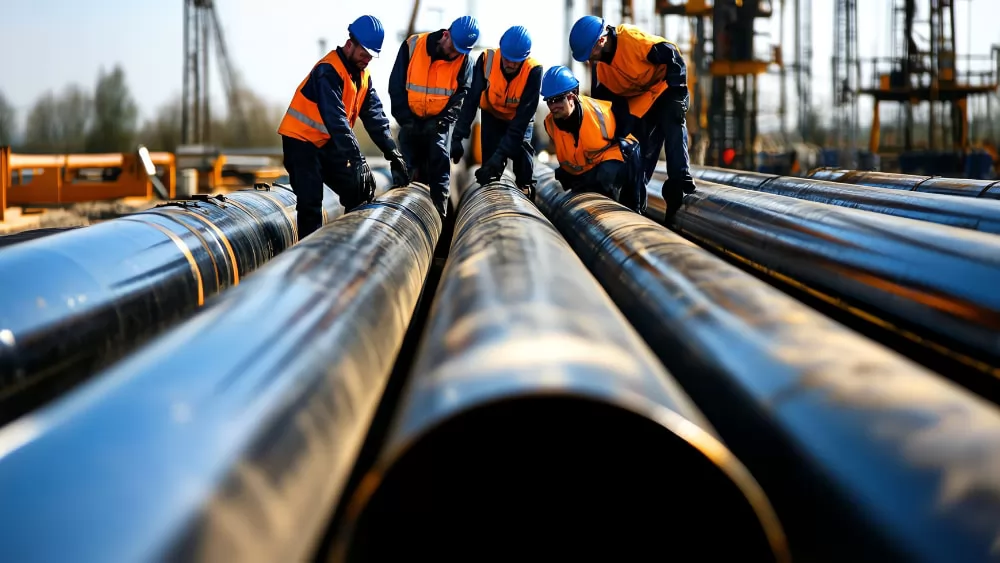
API 5L pipe is a widely used standard for line pipes in the oil, gas, and water transportation industries. Whether you are an engineer, project planner, or procurement professional, understanding what API 5L pipes are, how they are manufactured, and where they are applied is essential for making informed decisions. This guide explains the definition, key characteristics, main applications, and benefits of API 5L pipes, providing a comprehensive overview for industrial and commercial use.
An API 5L pipe is a type of line pipe designed for transporting oil, natural gas, and water under various pressures. API 5L pipes can be manufactured in both seamless and welded forms, produced from solid steel billets or rolled steel plates that are shaped, heat-treated, and processed to meet strict mechanical and chemical specifications. An API 5L pipe may also be referred to as a line pipe. Based on different material grades, API 5L pipes can be categorized into carbon steel pipes and alloy steel pipes. According to their applications, API 5L pipes can be classified as standard line pipes, high-strength line pipes, and pipes for high-pressure or corrosive environments.
API 5L pipe is widely used in the transportation of oil, gas, and water pipelines, serving engineering and industrial projects. It is designed to withstand high pressure and mechanical stress, providing strong durability and corrosion resistance. API 5L pipes will not easily corrode, which extends the service life of the pipeline, and they maintain a clean and safe surface for fluid transport. Compared with other general steel pipes, API 5L pipes offer superior mechanical performance, high pressure tolerance, and reliability under extreme temperature conditions, making them an ideal choice for pipelines in demanding environments.
The production of API 5L pipe involves a precise and controlled process to meet strict standards for oil, gas, and water transportation. API 5L pipes can be manufactured as seamless or welded, with seamless pipes requiring higher precision and more advanced equipment. The process begins by heating steel billets or rolled plates to enhance malleability. For seamless pipes, a mandrel pierces the billet to form a hollow tube, which is then rolled to the required diameter and wall thickness.
Welded pipes are formed by rolling and welding steel plates along a longitudinal seam. After shaping, the pipes undergo heat treatment to improve mechanical properties such as strength and ductility. Finally, the pipes are straightened, inspected for defects, and given a surface finish or protective coating to ensure durability, corrosion resistance, and compliance with API 5L specifications.
API 5L line pipes serve as the "blood vessels" of the global oil and gas industry. Their core application is to construct safe and efficient long-distance transportation systems. Their main application areas are as follows:
This is the primary and most classic use of API 5L pipe materials.
Onshore Long-Distance Transmission Pipelines: Main trunk lines connecting oil fields, gas fields, refineries, storage bases, and city gate stations. For example, China's "West-East Gas Pipeline" project and Russia's "Power of Siberia" pipeline extensively use high-grade API 5L welded pipes such as X70 and X80.
Offshore Oil and Gas Pipelines:
Gathering Networks: Within oil and gas fields, the network of pipes that gather production from individual wells to central processing facilities.
Natural Gas Distribution Networks: High-pressure city gas distribution grids.
Refineries and Chemical Plants: Process piping for raw materials, intermediate products, and finished products within the plant area.
Carbon Dioxide (CO₂) Transmission Pipelines: For Carbon Capture and Storage (CCS) projects, transporting industrially emitted CO₂ to storage sites.
Hydrogen Transmission Pipelines: With the development of the hydrogen energy industry, existing natural gas pipelines and new dedicated pipelines may adopt or upgrade to API 5L pipe materials suitable for hydrogen transport (requiring consideration of issues like hydrogen embrittlement).
Although primarily designed for oil and gas, their high strength and reliability also make them suitable for other demanding environments:
High-Pressure Coal Slurry Pipelines: For example, long-distance transportation in mining operations.
Large Structural Tubing: Under specific circumstances, they can be used for critical structural components such as bridge supports or offshore platform legs that require extremely high material strength and toughness (must comply with relevant structural standards).
High-Pressure Fluid Transport for Major Projects: Such as penstocks in hydropower stations.
In conclusion, API 5L pipes are essential components in the transportation of oil, gas, water, and other fluids, offering high strength, durability, and corrosion resistance. Understanding their types, material grades, manufacturing processes, and applications helps engineers, project managers, and buyers select the right pipe for their needs. Whether for high-pressure pipelines, industrial systems, or specialized applications, API 5L pipes provide reliable performance and long-term efficiency, making them a preferred choice in a wide range of industries.
Understanding API 5L Pipe Specifications: A Comprehensive Guide for Industry Professionals
API 5L Pipe Specification (46th Edition Updated on 2025)
Should API 5L Pipe Be Used for Casing? How API 5L Alternatives Can Save You Money


Your Name*
Your Email*


