
Ever found yourself wondering what is seamless pipe and why it’s such a vital component in modern industry? Curious about how it’s made, what sets it apart from welded alternatives, and where it’s commonly used? Maybe you’re trying to figure out how to identify seamless pipe, or you're debating whether seamless or ERW pipe is better for your next project?
Read on to learn what seamless pipe really is, how it is manufactured, the key differences from welded pipe, various application scenarios, and how to choose the right seamless pipe for your industry needs. Whether you are a first-time buyer or an experienced project engineer, this guide explains everything you need to know about seamless steel pipe in clear, practical terms.
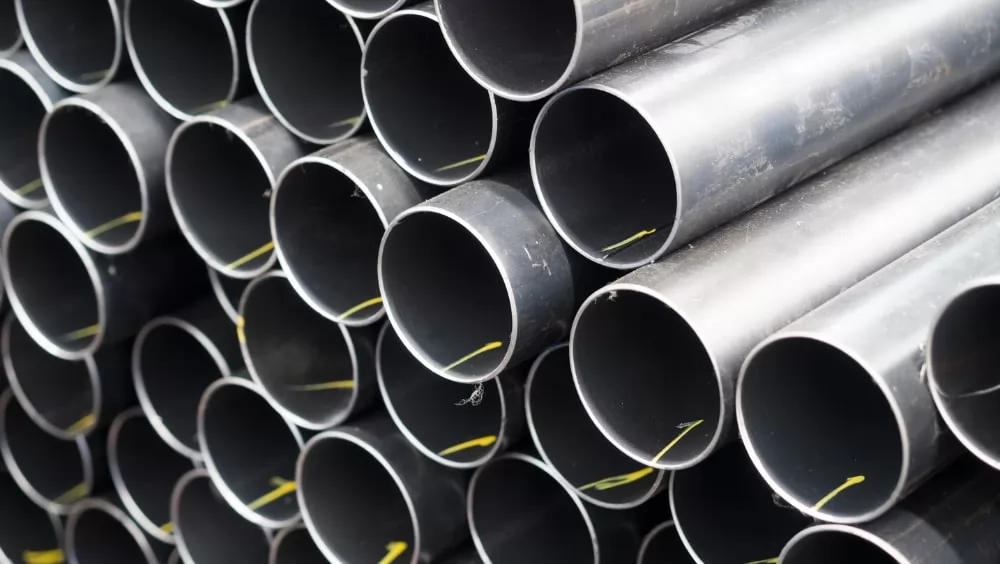
In simple terms, a seamless pipe is a steel tube formed as a single piece, with no welded seam anywhere along its wall.
That might not sound like a big deal — until you think about how a standard welded pipe is made. A steel plate is rolled into a cylinder and welded along the joint. That weld seam is, by nature, a structural weak point. Under high pressure, high temperature, or a corrosive environment, that's exactly where a pipe is most likely to crack or fail.
Seamless pipe works differently. It starts from a solid round billet of steel, which is then pierced and rolled at high temperature into a hollow tube. The result is a continuous metal crystal structure all the way around — no seam, no interruption.
The practical benefits are clear: higher pressure rating, better resistance to heat and corrosion, and more consistent wall thickness. In oil and gas, boiler systems, and aerospace hydraulics — wherever pipes face extreme conditions — seamless is usually the only viable option.
Before any pipe takes shape, it all starts with a solid cylinder of steel called a round billet (also known as a bloom or bar stock). Think of it as the raw block of material that everything else is carved from — except instead of carving, you're heating it up and punching a hole through the middle.
The steel grade used depends entirely on what the pipe needs to do. Here's a quick breakdown of the most common material choices:
The billet itself needs to meet strict internal quality standards before production even begins. Any cracks, inclusions, or segregation in the raw steel will show up — and get worse — during the manufacturing process. Most billets are inspected with ultrasonic testing prior to rolling. Standard billet diameters typically range from 80mm to 350mm, depending on the target pipe size.
One thing worth noting: the chemical composition of the steel at this stage pretty much locks in the final mechanical properties of the pipe. That's why material traceability — knowing exactly which heat number your steel came from — is such a big deal in industries like oil and gas or aerospace.
The whole process looks simple on paper — heat a solid billet, punch a hole through it, stretch it out — but there's a lot of precision involved at each step. Here's how it actually works from start to finish:
The round billet gets loaded into a rotary hearth furnace and heated to somewhere between 1,200°C and 1,280°C (roughly 2,200°F). This is hot enough to make the steel plastic — meaning it can be deformed without cracking. Getting this temperature right is critical. Too cold and the steel tears; too hot and you risk burning the grain structure.
This is where the magic happens. The hot billet is fed into a piercing mill, where two barrel-shaped rolls sit at an angle — usually around 3° to 6° off-axis. As the billet rotates and moves forward, a pointed tool called a piercing plug sits at the center. The angled rolls create a combination of rotational and axial forces that literally open up the steel from the inside, forming a hollow tube called a mother tube or shell.
This is the Mannesmann process, invented in 1885, and it's still the foundation of how most seamless pipes are made today. The wall thickness at this stage is still rough — it gets refined in the next steps.
The hollow shell moves into a mandrel mill or plug mill, where an internal mandrel bar holds the shape from the inside while external rolls squeeze the wall down and stretch the tube longer. This step can increase the pipe's length by a factor of 4 to 10 times compared to the original shell.
For larger or thicker pipes, a push bench or extrusion press might be used instead — we'll cover that in the next section.
At this point the steel has cooled down too much to keep working efficiently, so it goes back into a reheat furnace before the next rolling stage. Temperature here is usually maintained around 950°C to 1,050°C.
A stretch-reducing mill or sizing mill brings the pipe to its final outer diameter. This is done under tension, which also controls wall thickness consistency. Tolerances at this stage are typically within ±0.5mm to ±1.0mm on outer diameter for standard seamless pipes.
The pipe exits onto a cooling bed where it air-cools down to room temperature. This step also allows the steel's microstructure to stabilize. Some grades require controlled cooling rates to hit specific hardness or yield strength targets.
Depending on the grade and application, pipes may go through normalizing (reheating to ~900°C then air cooling), annealing, or quenching and tempering. This step significantly affects the final mechanical properties — tensile strength, yield strength, and impact toughness.
Pipes are straightened using a rotary straightener, then cut to length — standard mill lengths are typically 6m or 12m, though custom lengths are common. Ends are beveled or threaded depending on the application. The surface may also be shot-blasted or pickled to remove scale and improve appearance.
Before anything leaves the factory, pipes go through a full inspection routine. This typically includes:
Only after passing all of these checks does the pipe get stamped, bundled, and sent out.
When people talk about seamless pipe manufacturing, there are really two distinct routes depending on the pipe's size, wall thickness, and material. They share the same basic idea — start with solid steel, create a hollow — but the mechanics are quite different.
This is the most common method, used for the vast majority of seamless pipes produced worldwide. It's efficient, high-volume, and well-suited for carbon and alloy steel pipes with outer diameters ranging from about 21mm all the way up to 660mm.
As described in the step-by-step section above, the key action is the angled rolls working together with a piercing plug to open up the billet from the center out. What makes this process clever is that no material is actually removed — the steel is displaced and redistributed, not drilled or cut. That's why seamless pipes made this way have excellent grain flow continuity around the full circumference.
There are a few variations within this category:
This method is used when the material is difficult to pierce with the rotary method — think stainless steel, nickel alloys, titanium, and other specialty grades — or when you need very thick walls and larger diameters that rotary piercing can't reliably handle.
Here's how it works: a pre-heated billet is placed inside a container (the extrusion cylinder), and a powerful hydraulic press — typically generating forces of 3,000 to 12,000 metric tons — pushes it through a die around a mandrel. The steel is essentially squeezed through the gap between the die and the mandrel to form the pipe shape.
The extrusion process gives very precise control over wall thickness and is excellent for short-run specialty products. The downside is lower production speed and higher per-unit cost compared to rotary piercing.
| Rotary Piercing | Hot Extrusion | |
|---|---|---|
| Best for | Carbon & alloy steel, high volume | Stainless, alloys, specialty grades |
| OD range | 21mm – 660mm | Up to 800mm+ |
| Wall thickness | Standard to heavy | Heavy to extra-heavy |
| Production speed | High | Lower |
| Cost per unit | Lower | Higher |
| Dimensional control | Good | Excellent |
For most common seamless pipe applications — oil country tubular goods (OCTG), line pipe, boiler tubes, hydraulic cylinders — rotary piercing is the default choice. But when a project calls for duplex stainless steel pipe, Inconel tubing, or anything with very tight tolerances and unusual geometry, extrusion is usually the right call.
This is honestly the most fascinating part of the story.
When most people first hear about seamless pipe manufacturing, they're a little surprised. How do you turn a solid steel rod into a hollow tube?
The answer: you pierce it.
Here's how the process works. A round steel billet is heated to around 1,200°C — hot enough that the steel becomes workable. It's then fed between two angled rollers that spin it at high speed. As it rotates, a cone-shaped piercing plug is pushed into the center, forcing open a hole through the middle of the billet.
This technique is called the Mannesmann piercing process, invented in 1885 by the German Mannesmann brothers. It sounds almost brutal, but it's actually highly precise — the combination of rotation and diagonal compression creates internal stress that causes the metal at the center to open up naturally and evenly.
After piercing, you have a thick-walled hollow shell. That shell then goes through a series of rolling mills to be stretched and reduced, bringing the wall thickness and outer diameter down to the target dimensions. At this stage, the pipe can go through hot rolling for standard production, or continue to cold drawing for tighter dimensional tolerances and a smoother surface finish — ideal for hydraulic cylinders and instrumentation tubing.
The final steps involve heat treatment (normalizing, quenching, or annealing depending on the material), straightening, ultrasonic inspection, and hydrostatic pressure testing. Only pipes that pass every check leave the factory.
From a solid steel billet to a finished, certified seamless pipe — the whole process explains why seamless pipe costs more than welded pipe. Every step is pushing against the physical limits of metal.
Seamless pipe isn't a single product — it's a large family with many members.
By material, the most common is carbon steel seamless pipe, which covers the broadest range of general applications at relatively low cost. Alloy steel seamless pipe adds elements like chromium and molybdenum for high-temperature, high-pressure environments — the go-to choice for boilers and pressure vessels. Stainless steel seamless tube brings excellent corrosion resistance and is widely used in chemical processing, food production, and medical equipment.
By manufacturing process, hot-rolled seamless pipe is the high-volume workhorse, available in a wide range of sizes. Cold-drawn seamless tube takes things further in terms of precision — tighter wall tolerances and better surface finish, used wherever dimensional accuracy really matters.
By application, there are fluid transport pipes, high-pressure boiler tubes, oil casing, drill pipe, and structural tubes — each with its own set of international standards governing dimensions, material grades, and inspection requirements.
Which type you need comes down to your operating conditions: temperature, pressure, the medium inside the pipe, and how tight your tolerances need to be.
| Category | Type | Key Feature | Typical Use |
|---|---|---|---|
| By Material | Carbon Steel Seamless Pipe | Low cost, wide availability | General fluid transport, structural |
| Alloy Steel Seamless Pipe | High-temp & high-pressure resistance | Boilers, pressure vessels, power plants | |
| Stainless Steel Seamless Tube | Excellent corrosion resistance | Chemical, food, medical equipment | |
| By Process | Hot-Rolled Seamless Pipe | Wide size range, cost-effective | Oil & gas, construction, general industry |
| Cold-Drawn Seamless Tube | Tight tolerances, smooth surface | Hydraulic cylinders, instrumentation | |
| By Application | Oil Casing & Drill Pipe | High strength, API-certified | Drilling & downhole operations |
| Boiler Tube | Heat-resistant alloy steel | Steam generation, power generation | |
| Structural Seamless Tube | Precise dimensions, clean finish | Machinery frames, mechanical components |

A common question buyers ask is how to identify seamless pipe correctly. Choosing the right type is crucial for applications that require high pressure, high temperature, and structural integrity. Here are some practical tips to help you distinguish seamless pipes from welded ones:
1. Check for Weld Seams
The simplest way to identify a seamless pipe is by looking for the absence of a visible weld seam. Welded pipes are manufactured by rolling and welding a steel plate or strip, which leaves a straight or spiral seam along the pipe’s length. In contrast, seamless pipes are made from a solid billet that is pierced and rolled without any welding, so there are no seams or joints. This smooth finish is a key indicator when you inspect the outer and inner surfaces.
2. Uniform Wall Thickness
Seamless steel pipes are known for their consistent wall thickness around the entire circumference. Welded pipes, especially lower-quality ones, may show slight variations near the weld area, which can be detected by ultrasonic testing or precise measurements. If you want to know how to identify seamless pipe quickly, run your hand along the surface — a smooth, even thickness without ridges usually means it’s seamless.
3. Manufacturer Marks and Standards
Reputable manufacturers clearly mark their pipes according to international standards such as ASTM A106, API 5L, or EN10210. These markings often include the grade, size, heat number, and a note indicating whether the pipe is seamless (SMLS). Always check the pipe markings and request mill test certificates (MTC) to verify the pipe’s origin and production process. This is an important step for buyers concerned about quality assurance and compliance.
Knowing how to identify seamless pipe helps ensure you get the right product for demanding uses in oil and gas pipelines, boiler tubes, mechanical engineering, and structural applications. If you’d like to learn more about where these pipes are used, check out our related article on 7 Common Applications of Seamless Steel Pipes for more practical insights.
Seamless steel pipes are critical components across a wide range of industries due to their strength, durability, and ability to withstand high pressure, temperature, and corrosive environments. Because seamless pipes are made without any welding seams, they offer superior mechanical performance and structural reliability—making them ideal for demanding industrial and engineering applications. Below are the main sectors where seamless steel pipes play an indispensable role.

One of the largest consumers of seamless steel pipes is the oil and gas sector. These pipes are used extensively for exploration, drilling, transportation, and refining. Common applications include casing pipes, tubing, and line pipes for transporting crude oil, natural gas, and refined products. Because of their ability to resist pressure and corrosion deep underground or undersea, seamless steel pipe is preferred over welded alternatives. What is the difference between seamless and welded pipe? In this industry, the difference can mean fewer failures and better safety performance under extreme conditions.
In power plants—whether nuclear, thermal, or renewable—seamless pipes are used for high-pressure steam lines, boiler tubes, and heat exchangers. These components operate under extreme temperatures and internal pressures, which is why how seamless pipe is made becomes important. The absence of welded joints ensures uniform stress distribution and long service life, even under cyclic loading and thermal expansion.
From drive shafts and steering columns to suspension systems and hydraulic components, seamless steel pipes are widely used in automotive manufacturing. Their ability to be machined into precision parts with consistent tolerances makes them a natural fit for high-performance mechanical systems. Is seamless pipe stronger than welded? For many high-load, rotating parts, the answer is yes—making them essential in vehicle safety and performance.
In chemical plants and refineries, seamless pipes transport corrosive fluids and gases at high temperatures. These environments demand materials with high resistance to wear and chemical attack. Seamless pipes made of stainless steel, alloy steel, or duplex steel are commonly used for heat exchangers, reactor coils, and process piping. Their smooth inner surface reduces the risk of buildup and contamination, which is vital in precise chemical processes.
Seamless steel pipes are also used in architectural structures, bridge supports, offshore platforms, and infrastructure projects. Their high load-bearing capacity and uniform mechanical properties make them ideal for withstanding wind loads, seismic activity, and dynamic forces. What is meant by seamless pipe in construction? It means reliability and long-term structural integrity with minimal maintenance.
How are seamless pipes made affects their ability to handle internal pressures. That’s why they are the material of choice for boiler tubes, superheater tubes, and pressure vessels. In these applications, failure is not an option, and the flawless, homogeneous structure of seamless pipe ensures safe and stable operation.
Marine-grade seamless steel pipes are used in ship hulls, pressure systems, and fluid handling applications. Their resistance to saltwater corrosion and structural fatigue is crucial for long-term service in harsh offshore environments.
If you’d like to understand these uses in detail, don’t miss our in-depth article on the 7 Common Applications of Seamless Steel Pipes, where you can learn how they add value to each industry.
Not all seamless pipes are made equal. Two pipes can look identical sitting on a shelf, but perform very differently once they're under pressure, exposed to heat, or running corrosive fluids. So what actually separates a well-made seamless pipe from a mediocre one? Here are the things that matter most.
This is probably the single most telling indicator of a quality seamless pipe. Because there's no weld seam, the wall thickness should be uniform around the entire circumference. If one side of the pipe wall is noticeably thicker than the other — a defect called eccentricity — it's a sign of poor control during the piercing or rolling stage.
Industry standards like ASTM and API set tolerance limits for this. For most standard seamless pipes, wall thickness variation should stay within ±10% of the nominal thickness. Premium grades tighten that to ±5% or less. A pipe that fails this check will have weak spots — and weak spots are where failures start.
Run your hand along the outside of a quality seamless pipe and it should feel consistently smooth. What you don't want to see or feel are:
The inner surface matters just as much, especially for pipes carrying fluids. A rough or pitted bore increases turbulence, traps deposits, and accelerates corrosion from the inside out. High-quality pipes are typically pickled (acid-cleaned) or shot-blasted after production to remove scale and leave a clean surface finish.
A pipe that bows or curves might seem like a minor cosmetic issue, but on a job site it creates real headaches — misaligned joints, added stress at connection points, and fittings that don't sit flush. Good seamless pipes go through a rotary straightening process after cooling, and the standard most manufacturers work to is a straightness tolerance of no more than 1.5mm per meter of length (per ASTM standards). Over a 6-meter pipe, that means no more than 9mm of total bow.
Every steel grade comes with a defined set of minimum mechanical properties — tensile strength, yield strength, and elongation. These aren't marketing numbers; they're engineering commitments. A pipe labeled API 5L Grade B, for example, should have:
If a supplier can't provide a mill test report (MTR) showing actual test results for the specific batch you're buying — walk away. The MTR is how you verify the pipe in your hands actually meets the spec it claims to.
Some of the most dangerous defects in a seamless pipe are invisible to the naked eye — internal cracks, laminations, or inclusions buried inside the steel wall. These form during the original steelmaking process or during rolling, and they won't show up until the pipe is under load or pressure.
Quality manufacturers use ultrasonic testing (UT) or electromagnetic inspection to scan the full length of every pipe before it ships. This is non-destructive — the pipe passes through a sensor array that detects any irregularities in the steel's internal structure. If a pipe hasn't been through this kind of testing, there's simply no way to know what's hiding inside the wall.
A seamless pipe might look the right size, but small dimensional errors compound quickly when you're assembling a system with dozens of joints. Outer diameter, inner diameter, and wall thickness all need to land within the specified tolerances. For reference, a standard 2-inch Schedule 40 seamless pipe has a nominal OD of 60.3mm and a wall thickness of 3.91mm — deviations outside the permitted tolerance can affect how fittings seal and how the pipe handles pressure.
Length tolerances also matter for fabrication: most mills work to +100mm / -0mm on cut-to-length pipes, meaning you get at least what you ordered.
This last point isn't about the physical pipe itself — it's about the paperwork. A genuinely high-quality seamless pipe comes with documentation that tells you exactly where it came from and what it went through:
If a supplier is vague about heat numbers or can't produce an MTR quickly, that's a red flag. In industries like oil and gas, power generation, or chemical processing, traceability isn't optional — it's how you prove accountability when something goes wrong.
The short version: a good seamless pipe has uniform walls, a clean surface, straight geometry, verified mechanical properties, no hidden internal defects, accurate dimensions, and full paperwork to back it all up. Any one of these missing is worth asking questions about before the pipe goes into the ground — or under pressure.
| Aspect | Seamless Pipe | Welded Pipe |
|---|---|---|
| Production Process | Made from a solid billet; heated and pierced to create a hollow tube with no weld seam. | Manufactured by rolling steel into a tube and welding the seam longitudinally. |
| Strength & Pressure Resistance | Higher strength with no weak points; ideal for high-pressure, high-temperature applications. | Good for moderate pressure; the welded seam can be a weak point under extreme conditions. |
| Cost | More expensive due to complex manufacturing and higher quality raw materials. | More cost-effective and widely available; easier and faster to produce. |
| Size Availability | Typically limited in larger diameters but suitable for thicker walls. | Available in larger diameters and longer lengths; wall thickness can be limited by welding. |
| Common Applications | Oil & gas pipelines, boilers, high-pressure vessels, petrochemical plants. | Structural uses, water pipelines, fencing, low-pressure fluid transport. |
This is one of the most common questions among engineers, and the answer isn't complicated.
Go with seamless pipe when: operating pressure is high (generally above 10 MPa), temperatures are elevated, the medium is corrosive, safety classification is strict, or you need consistent wall thickness and precise tolerances. It costs more, but it's worth it.
Go with welded pipe when: you're dealing with low-pressure water lines, general building structures, heating pipework, or decorative applications. The demands are lower, and welded pipe is cheaper, comes in more standard sizes, and has shorter lead times.
One thing that often gets overlooked: for small-diameter thin-wall tubing, seamless has a clear edge — weld quality in small sizes is much harder to control consistently. For large-diameter pipe (say, over 500mm), welded pipe is actually more common, because producing large seamless pipe is technically very difficult and expensive.
The bottom line: operating conditions determine the grade, the grade determines the process, and the process determines the cost. Don't over-specify seamless pipe where welded will do — and don't cut corners with welded pipe in high-pressure systems.
Seamless pipes offer unmatched durability and performance in demanding environments, from energy to aerospace and beyond. Their unique manufacturing process ensures fewer weak points, making them a preferred choice for critical projects.
With this understanding, you can confidently select seamless pipes that meet your project’s specific needs, balancing safety and efficiency.
For reliable, high-quality seamless pipes, Dexin Steel Tube is your trusted partner — delivering excellence to help your projects succeed under any challenge.


Your Name*
Your Email*


